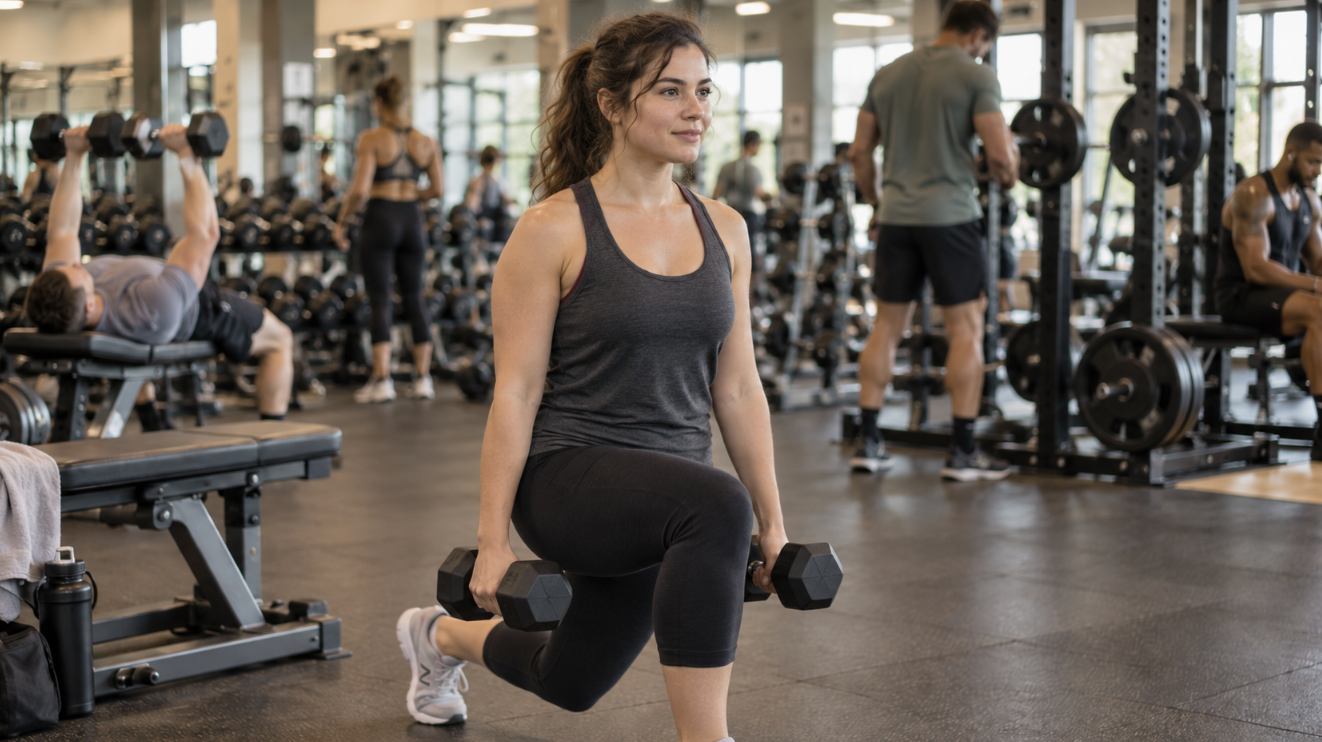
When people hear strength training, they often picture bodybuilders lifting enormous weights in a gym.
But strength training doesn't have to look anything like that.
You don't have to lift hundreds of pounds.
You don't need to be an athlete.
And you definitely don't need to be trying to dramatically change the way your body looks.
Strength training is simply a form of exercise that asks your muscles to work against resistance.
That resistance might come from:
Dumbbells or barbells
Weight machines
Resistance bands
Kettlebells
Cable machines
Your own body weight
Everyday objects with enough resistance to challenge your muscles
And building strength can support much more than appearance.
Research has linked resistance training with improvements in muscle strength, physical function, body composition, bone health, and several other health outcomes. An overview of systematic reviews representing more than 360 primary studies found benefits for physical functioning and associations with lower risks of cardiovascular disease and premature death. Read the systematic-review overview on PubMed
So let's talk about why strength training deserves a place in your health routine—even if you never plan on becoming a “gym person.”
First... What Actually Counts as Strength Training?
Strength training is also called resistance training.
Basically, your muscles have to produce force against some type of resistance.
That means a strength workout could include squats with a barbell.
But it could also include body-weight squats in your living room.
A push-up is resistance training.
So is using resistance bands.
So are lunges, rows, presses, deadlifts, and many exercises performed on weight machines.
The equipment isn't what makes an exercise “real” strength training.
The resistance does.
How Often Should You Strength Train?
You don't have to lift weights every day.
Current World Health Organization physical-activity guidelines recommend that adults perform muscle-strengthening activities involving the major muscle groups on at least two days per week.
WHO recommends strength training in addition to regular aerobic activity because the two provide different—but complementary—health benefits. See WHO's physical-activity recommendations
That means your weekly routine might include walking, cycling, swimming, or another form of cardio plus a couple of strength-training sessions.
You don't have to choose between being “a cardio person” and “a weights person.”
Your body can benefit from both.
Strength Training Helps You Actually Get Stronger
This one sounds obvious, but it's worth emphasizing.
Strength training makes everyday tasks easier because your muscles become better at producing force.
That can translate into things like carrying groceries, picking something up from the floor, climbing stairs, moving furniture, carrying a child, or simply getting out of a chair more easily.
The effects aren't limited to young adults either.
A systematic review and meta-analysis of randomized trials found that resistance training significantly improved muscle strength even among adults 75 years and older, including people over age 80. Read the older-adult resistance-training meta-analysis
A much larger 2025 network meta-analysis involving 151 randomized trials and more than 6,000 older adults found improvements in physical function, lean body mass, muscle size, and strength with resistance training. Interestingly, even relatively low training volumes produced meaningful improvements in several outcomes. Read the 2025 network meta-analysis
In other words:
You are not “too old” to get stronger.
Muscle Is About More Than Appearance
Muscle sometimes gets discussed almost entirely in terms of aesthetics.
Do you look toned?
Do you have abs?
Are your arms defined?
But muscle tissue actually has important functional roles.
Your skeletal muscles help you move, maintain posture, perform everyday activities, and stay physically independent as you age.
And unfortunately, muscle strength and muscle mass tend to decline with aging.
That doesn't mean everyone inevitably becomes weak.
Resistance training can help counter some of those changes.
A 2024 systematic review and meta-analysis of randomized trials in adults 65 and older found that resistance training increased muscle size at both the whole-muscle and muscle-fiber level. Read the muscle-hypertrophy meta-analysis
So building muscle isn't just:
“I want bigger muscles.”
It can also be:
“I want my body to stay capable.”
Strength Training Doesn't Have to Mean Getting “Huge”
A common concern—especially among beginners—is:
“I don't want to lift weights because I don't want to get bulky.”
But simply doing strength training does not suddenly create enormous amounts of muscle.
Muscle growth occurs gradually and is influenced by factors including training volume, intensity, nutrition, genetics, hormones, and how long someone has been training.
Resistance training can increase muscle size—that's one of its benefits—but the amount of muscle gained varies substantially from person to person.
You also don't need to train specifically for maximum muscle growth.
Someone can strength train primarily to become stronger, improve function, support bone health, or simply maintain muscle.
You get to decide what your goal is.
Your Bones Respond to Exercise Too
Your muscles aren't the only tissues affected by resistance exercise.
Your bones respond to mechanical loading as well.
Bone health becomes especially important with age because declining bone density can increase the risk of osteoporosis and fractures.
Research in postmenopausal women—one of the populations at greatest risk for osteoporosis—has found beneficial effects of resistance training on bone mineral density.
A 2025 systematic review and meta-analysis of 17 randomized controlled trials found that resistance training improved bone mineral density at the lumbar spine, femoral neck, and total hip in postmenopausal women. Read the bone-density meta-analysis
An earlier meta-analysis also found favorable effects of dynamic resistance exercise at the lumbar spine, femoral neck, and total hip. Read the resistance-training and bone-health meta-analysis
That doesn't mean lifting weights guarantees you'll never develop osteoporosis.
Bone health is influenced by many things, including age, genetics, hormones, nutrition, medications, and other health conditions.
But resistance training can be one part of supporting strong bones over time.
Strength Training Can Support Heart and Metabolic Health Too
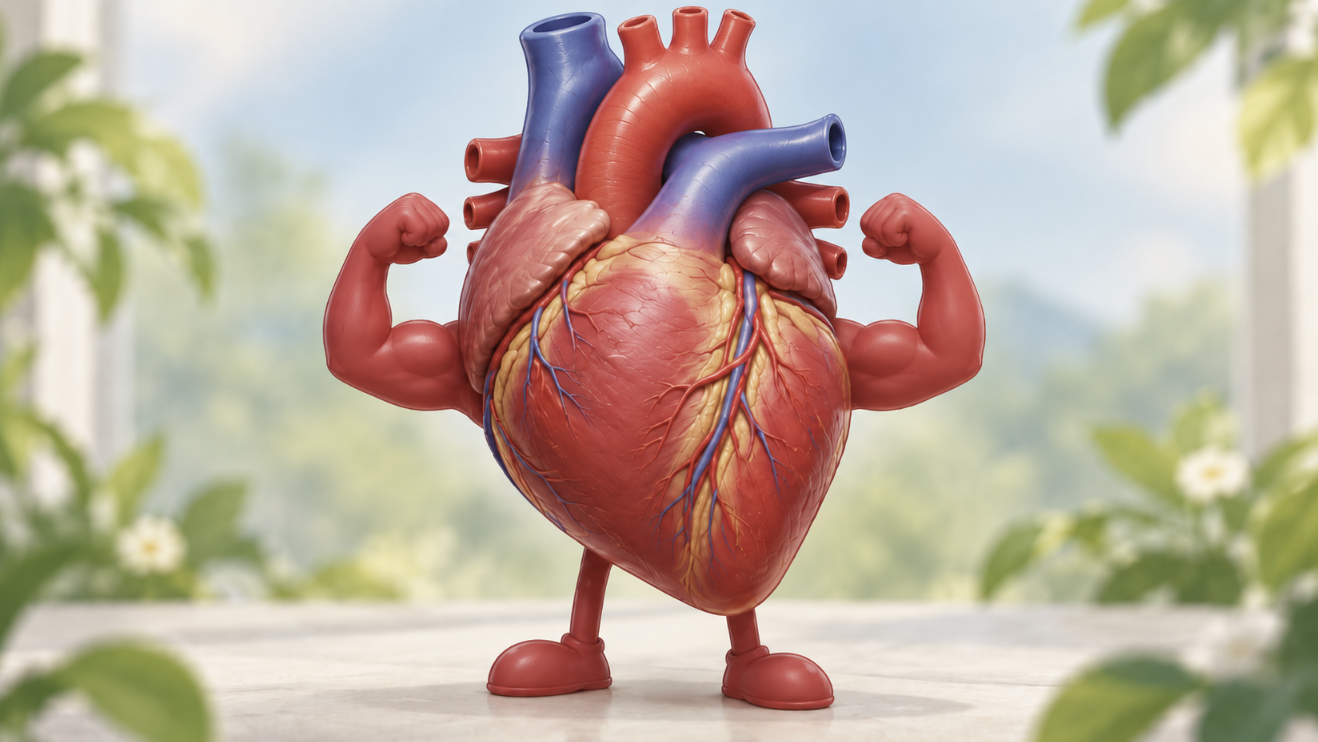
Cardio usually gets all the credit when people talk about heart health.
And aerobic exercise absolutely matters.
But resistance training may also contribute to cardiovascular and metabolic health.
An overview of systematic reviews found resistance training was associated with reduced cardiovascular-disease incidence and improved physical functioning in adults. Read the review of resistance training and health outcomes
A 2026 systematic review and meta-analysis also found improvements in several cardiometabolic risk factors among adults with overweight or obesity who participated in resistance-training programs, including changes in blood pressure and other metabolic measures. Read the cardiometabolic meta-analysis
Again, that doesn't mean weightlifting replaces walking, running, cycling, or other aerobic activity.
Think of them as teammates.
Cardio and strength training do different jobs—and both can contribute to overall health.
Strength Training May Support Mental Health Too
Exercise doesn't only affect your muscles.
It can affect how you feel.
Research examining both aerobic and resistance exercise has found improvements in symptoms of depression and anxiety among adults with diagnosed depression or anxiety disorders.
A 2025 systematic review included 32 randomized controlled trials involving more than 3,200 participants and found that exercise interventions were associated with meaningful reductions in depressive symptoms. Read the exercise and mental-health meta-analysis
A separate systematic review focusing specifically on strength training also found antidepressant effects among people with depression or depressive symptoms. Read the strength-training meta-analysis
That doesn't mean someone should replace mental-health treatment with a barbell.
Exercise can be a useful part of supporting mental health, but it isn't a substitute for professional care when professional care is needed.
Is Strength Training Associated With Living Longer?
Interestingly, research suggests it may be.
A 2022 systematic review and meta-analysis found that compared with people reporting no resistance training, people doing some resistance training had a lower risk of all-cause mortality in the included observational studies.
Researchers also found associations with lower cardiovascular and cancer mortality. Read the resistance-training and mortality meta-analysis
The greatest observed reduction in all-cause mortality occurred around roughly 60 minutes of resistance training per week, although the authors emphasized that more research is needed to determine the ideal amount.
And this is important:
These mortality studies are primarily observational.
That means researchers can identify an association, but they cannot prove that resistance training alone caused people to live longer.
People who strength train may differ from people who don't in many other ways.
Still, the findings fit into a much larger body of evidence showing that strength training can contribute to overall health.
You Don't Need Fancy Equipment
A gym can be useful.
But it isn't mandatory.
A beginner strength workout can use simple movements like squats, lunges, pushing movements, pulling movements, hip-hinge exercises, carries, and core exercises.
Resistance can come from bands or body weight.
Eventually, though, exercises usually need to become more challenging if you want to continue getting stronger.
That brings us to an important idea:
Your Body Needs a Reason to Adapt
Imagine doing 10 body-weight squats every Monday for the next five years.
At first, they might feel difficult.
Eventually?
Probably not so much.
When an exercise stops challenging your muscles, your body has less reason to continue adapting.
That's why strength training often involves progressive overload.
Progressive overload simply means gradually increasing the challenge over time.
That might mean:
adding a little weight,
doing another repetition,
performing an additional set,
using a more difficult exercise variation,
improving your range of motion,
or performing the movement with better control.
It doesn't mean you need to add 20 pounds every workout.
Progress can be gradual.
A little more challenge over time adds up.
You Also Don't Need to Train Until You Collapse
A workout doesn't need to leave you unable to walk down the stairs for three days in order to be effective.
Muscle soreness can occur after training—especially when you try a new exercise, increase your training volume, or return after a break.
But soreness is not a requirement for progress.
And pain isn't something you should automatically push through.
There's a difference between:
“My muscles are working hard”
and
“Something feels sharp, unstable, or genuinely painful.”
The goal of strength training is to challenge your body, not punish it.
Start Lighter Than Your Ego Wants To
One of the easiest ways to make strength training unnecessarily difficult is trying to lift too much too soon.
If you're learning a new exercise, start with a resistance that allows you to practice the movement with control.
Then gradually build from there.
WHO specifically encourages people who are inactive to begin with smaller amounts of physical activity and gradually increase duration, frequency, and intensity over time. Read WHO's physical-activity guidance
Learning good technique first also makes it easier to progress later.
You don't get bonus health points because your first dumbbell was heavier than someone else's.
What About Women and Strength Training?
Strength training is beneficial regardless of gender.
Women sometimes receive fitness advice that treats strength training as something they should approach differently because they supposedly need to stay “small” or only use tiny weights.
There's no health requirement that says women need to avoid getting stronger.
In fact, resistance training can become particularly valuable across the lifespan as women experience changes in muscle and bone related to aging and menopause.
Research in postmenopausal women has found improvements in physical fitness, strength, and several measures relevant to healthy aging with resistance training. Read the systematic review in postmenopausal women
You don't have to train differently because of someone else's idea of what your body is supposed to look like.
Strength is useful.
What Should a Beginner Actually Do?
You do not need a complicated six-day bodybuilding split.
For many beginners, two full-body strength sessions per week can be a perfectly reasonable place to start and aligns with public-health recommendations for muscle-strengthening activity. See WHO recommendations
A beginner program might include movements that train the major muscle groups of the legs, hips, back, chest, shoulders, arms, and core.
The exact exercises matter less than finding movements you can perform safely and progressively.
For example, someone might practice a squat, a hip-hinge movement, a pushing exercise, a pulling exercise, and a few additional movements appropriate for their abilities.
You don't need 17 exercises.
You need consistency.
More Isn't Automatically Better
This comes up constantly in fitness.
If two strength workouts per week are good, wouldn't seven be amazing?
Not necessarily.
Your muscles also need time to recover and adapt.
And doing more exercise only helps when you can actually recover from it.
Interestingly, the 2025 network meta-analysis involving older adults found that relatively low-volume resistance training still produced substantial improvements in several measures of physical function and lean mass, while higher volumes appeared more useful when maximizing strength was the goal. Read the network meta-analysis
The best program isn't necessarily the program with the most exercises.
It's the one you can perform consistently, recover from, and gradually progress.
You Don't Have to Be “Good at the Gym” Before You Start
Nobody walks into a gym for the first time magically knowing how every machine works.
Everyone had a first workout.
Everyone learned how to squat.
Everyone once picked up a dumbbell and wondered:
“Wait... am I doing this right?”
If you're completely new, consider learning from a qualified fitness professional, reputable instructional resources, or someone experienced who can help you understand basic technique and equipment.
If you have a significant medical condition, recent surgery or injury, major balance limitations, or symptoms triggered by exercise, your healthcare professional may also help determine whether your exercise plan needs modification.
But being a beginner itself isn't a medical condition.
You are allowed to start before you know everything.
The Bottom Line
Strength training isn't just for bodybuilders.
It's not only about looking muscular.
And it definitely isn't reserved for people who already feel comfortable in a gym.
Resistance training can help you:
get stronger, maintain muscle, improve physical function, support bone health, and contribute to overall health as you age.
For most adults, public-health guidelines recommend strengthening the major muscle groups on at least two days each week.
You can use dumbbells.
Machines.
Bands.
Body weight.
Whatever works for you.
Start with something manageable.
Learn the movements.
Increase the challenge gradually.
And remember:
The goal isn't to lift the most weight in the room.
The goal is to build a body that is stronger and more capable than it was before.
Sources
World Health Organization.Physical activity recommendations for adults.
View WHO guidance
El-Kotob, R., et al. (2020). Resistance training and health in adults: An overview of systematic reviews.
View on PubMed
Shailendra, P., Baldock, K. L., Li, L. S. K., Bennie, J. A., & Boyle, T. (2022). Resistance training and mortality risk: A systematic review and meta-analysis. American Journal of Preventive Medicine, 63(2), 277–285.
View on PubMed
Grgic, J., et al. (2020). Effects of resistance training on muscle size and strength in very elderly adults: A systematic review and meta-analysis of randomized controlled trials. Sports Medicine, 50(11), 1983–1999.
View on PubMed
Radaelli, R., et al. (2025). Effects of resistance training volume on physical function, lean body mass and lower-body muscle hypertrophy and strength in older adults: A systematic review and network meta-analysis of 151 randomised trials. Sports Medicine.
View on PubMed
Kemmler, W., et al. (2020). Effects of dynamic resistance exercise on bone mineral density in postmenopausal women: A systematic review and meta-analysis.
View on PubMed
Wu, Y., et al. (2026). Effects of moderate-frequency resistance training on cardiometabolic risk factors in adults with overweight or obesity: A systematic review and meta-analysis.
View on PubMed
Banyard, H., et al. (2025). The effects of aerobic and resistance exercise on depression and anxiety: Systematic review with meta-analysis.
View on PubMed