Protein: Everything You Need to Know
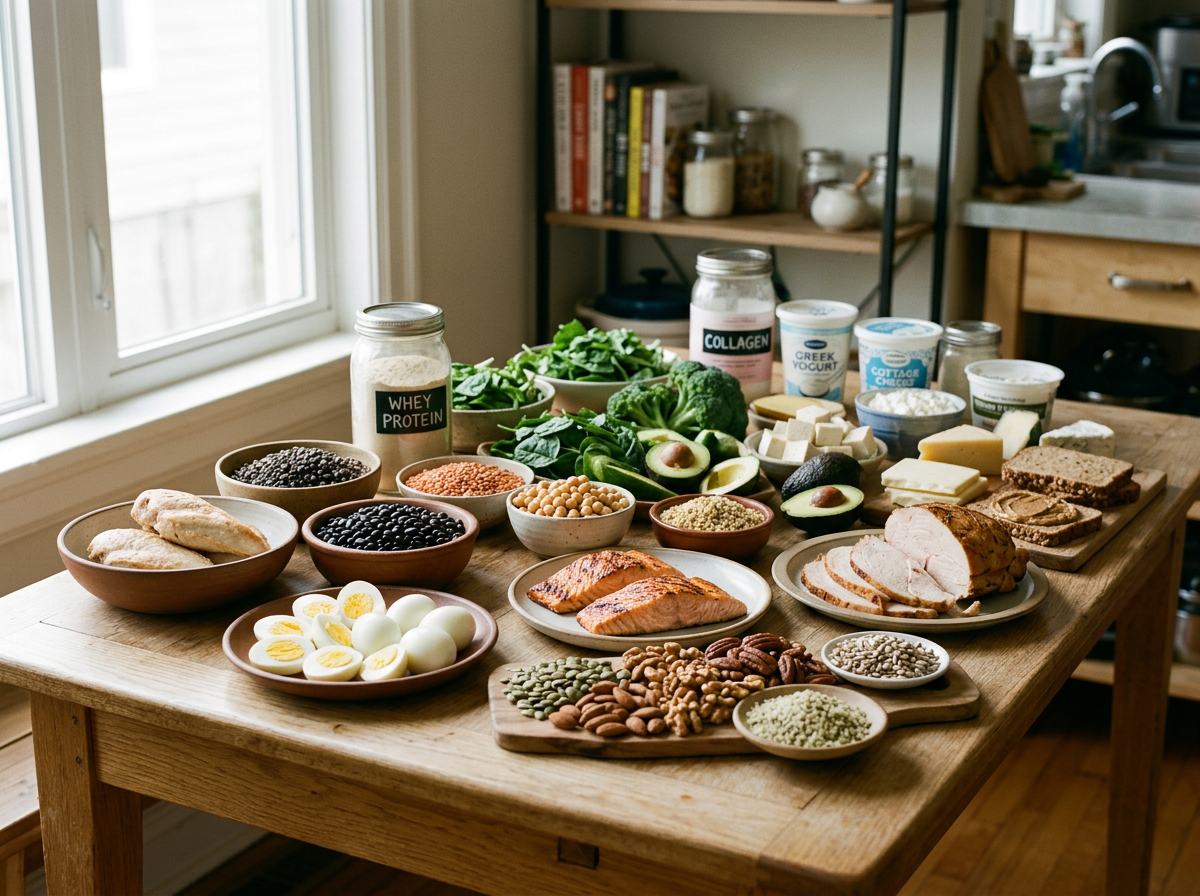
Protein gets a lot of attention in the health and fitness world.
Protein shakes. High-protein snacks. Protein bars. Extra protein everything.
And while protein is definitely important for building and maintaining muscle, that's only one small part of what it does.
Protein is an essential macronutrient that your body uses every single day to build and maintain tissues and produce important molecules such as enzymes and hormones. The World Health Organization (WHO) describes proteins as building blocks for both structural components of the body, including muscle, and functional molecules such as hormones and enzymes. Read the WHO healthy-diet guidance
So whether you lift weights five days a week or have never touched a dumbbell in your life:
Protein still matters.
So... What Exactly Is Protein?
Protein is one of the three major macronutrients, along with carbohydrates and fats.
Proteins themselves are made from smaller molecules called amino acids.
Think of amino acids like individual LEGO pieces. Your body can arrange them in different combinations to create the many different proteins it needs.
Some amino acids can be made by the body. Others, called essential amino acids, cannot be produced in sufficient amounts and therefore have to come from the foods we eat.
Once you eat a protein-containing food, your digestive system breaks much of that protein down into amino acids and small peptides. Those amino acids can then be absorbed and used throughout the body.
Protein contributes to much more than muscle. Proteins are involved in the structure and function of tissues throughout the body and are also used to produce compounds such as enzymes and hormones.
In other words:
Protein isn't just something you eat after a workout. Your body is constantly using it as building material.
Why Is Protein So Important?
Muscle is probably the first thing that comes to mind when people hear the word “protein.”
And there is a good reason for that.
Skeletal muscle is constantly undergoing normal processes of protein breakdown and protein synthesis. Dietary protein provides amino acids that can be used to repair, maintain, and build muscle tissue.
Exercise—particularly resistance training—also stimulates muscle adaptation.
A large systematic review and meta-analysis published in the British Journal of Sports Medicine examined 49 studies involving 1,863 participants and found that protein supplementation enhanced gains in muscle size and strength during prolonged resistance-training programs. However, the researchers also found that the benefits appeared to level off once total protein intake reached roughly 1.6 grams per kilogram of body weight per day.
Read the Morton et al. systematic review and meta-analysis
That's an important detail because it shows something people sometimes forget:
More protein is not automatically better.
Once you're getting enough to support your body's needs and goals, simply adding more and more protein does not necessarily mean more muscle.
And protein's role extends beyond your biceps. Proteins are involved throughout the body in tissue structure, cellular processes, enzymes, transport proteins, hormones, and many other biological functions.
How Much Protein Do You Actually Need?
This is where nutrition gets a little more individualized.
There isn't one perfect gram target that everyone needs to hit.
Protein needs can vary depending on factors such as:
Age
Body size
Pregnancy or lactation
Physical activity
Training goals
Overall calorie intake
Certain health conditions
For healthy adults in the United States and Canada, the current Recommended Dietary Allowance (RDA) is 0.8 grams of protein per kilogram of body weight per day.
The RDA is designed to meet the needs of nearly all healthy people in a population—not to represent the ideal muscle-building target for every athlete or highly active person.
View the Dietary Reference Intake tables from the National Academies
A recent systematic review commissioned to help inform future updates to the U.S. and Canadian Dietary Reference Intakes also notes that the current adult RDA remains 0.8 g/kg/day, while protein needs are higher during certain stages such as growth, pregnancy, and lactation.
Read the 2024 AHRQ systematic review on protein requirements
Athletes and people intentionally trying to maximize muscle growth may benefit from higher intakes.
Again, though:
Higher isn't automatically better forever.
The resistance-training meta-analysis discussed earlier found that additional muscle-building benefits became much smaller beyond an intake of approximately 1.6 g/kg/day in the populations studied.
So rather than asking:
“How much protein can I possibly eat?”
a better question is:
“How much protein makes sense for my body, activity level, and goals?”
Animal Protein vs. Plant Protein
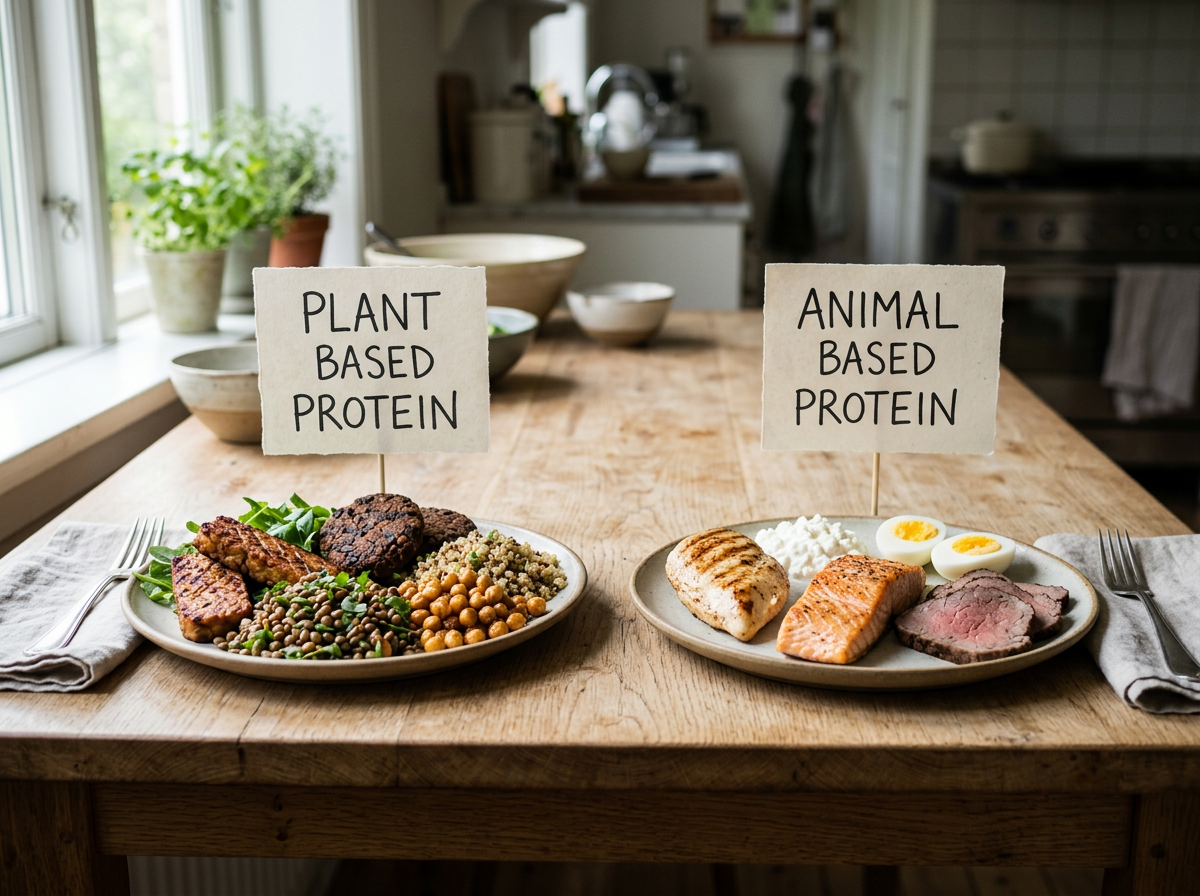
You absolutely do not have to get all of your protein from chicken breasts and protein shakes.
Protein can come from both animal and plant foods.
Common animal protein sources include:
Fish and seafood
Chicken and turkey
Meat
Eggs
Greek yogurt
Cottage cheese
Milk
Plant protein sources include:
Beans
Lentils
Chickpeas
Tofu
Tempeh
Edamame
Nuts
Seeds
Peas
Whole grains
Different foods contain different amounts and combinations of amino acids, and individual proteins can differ in digestibility and amino-acid composition.
But that does not mean plant protein “doesn't count.”
A 2021 systematic review and meta-analysis of randomized controlled trials compared animal and plant proteins for lean mass and muscle strength. Researchers found no significant difference in muscle-strength changes between the two protein sources, although animal protein showed a small advantage for some measures of lean mass, particularly among younger adults.
Read the plant-vs-animal protein meta-analysis
A newer 2025 systematic review similarly found a small advantage for animal protein for muscle mass in some comparisons, but found no significant difference in muscle strength or physical performance overall. Soy protein performed similarly to milk protein for muscle mass in the pooled analysis.
Read the 2025 systematic review of plant and animal protein
So if you're vegetarian, vegan, or simply enjoy plant-based foods, you can absolutely include plant proteins as an important part of your diet.
Plant Protein May Have Other Benefits Too
Protein source can matter for reasons that have nothing to do with muscle.
Foods don't contain protein in isolation.
For example, beans and lentils provide protein along with fiber and other nutrients. Fish provides protein along with different types of fatty acids. Nuts and seeds provide protein alongside unsaturated fats.
This is why looking at the entire food can be more useful than judging foods only by how many grams of protein they contain.
A systematic review and meta-analysis published in The BMJ examined 32 prospective cohort studies involving more than 700,000 participants. Higher plant-protein intake was associated with lower all-cause and cardiovascular mortality, while total animal-protein intake was not significantly associated with cardiovascular or cancer mortality overall.
Read the BMJ systematic review and meta-analysis
More recent research has also examined what happens when some animal-protein calories are replaced with plant-protein calories. A 2026 systematic review and meta-analysis involving more than 1 million participants found that replacing a portion of animal protein with plant protein was associated with lower all-cause and cardiovascular mortality.
Read the 2026 plant-protein substitution meta-analysis
Because these are observational data, they cannot prove that plant protein itself directly caused the reduction in risk. However, they add to the evidence supporting variety in protein sources rather than relying on one food for all of your protein.
Do You Need Protein Powder?
Nope.
Protein powder can be convenient, but it is not a requirement for being healthy or building muscle.
Your digestive system does not see protein from Greek yogurt and think:
Sorry, this doesn't have a gym logo on the container. Doesn't count.
Protein from regular foods still provides amino acids.
Foods such as:
Eggs
Yogurt
Cottage cheese
Fish
Poultry
Beans
Lentils
Tofu
Tempeh
can all contribute toward your daily protein intake.
Protein powder is simply another way to add protein.
For someone with a busy schedule, a smaller appetite, or higher protein goals, a shake may be an easy and convenient option.
Research does show that protein supplementation can improve muscle and strength gains when combined with resistance training—but the benefit appears to come from helping people obtain sufficient total protein, rather than protein powder having some special muscle-building property.
Read the protein supplementation meta-analysis
Think of protein powder as a tool, not a requirement.
What About Protein and Weight Management?
Protein sometimes gets marketed as if eating more of it automatically causes weight loss.
The reality is more nuanced.
Higher-protein meals can sometimes increase feelings of fullness in the short term. A systematic review and meta-analysis of randomized trials found that higher protein intake increased fullness and reduced hunger in acute feeding studies.
However, researchers found that the evidence from longer-term studies was less clear.
Read the systematic review of protein and appetite
Higher-protein diets may also produce modest benefits for weight management in some people.
A 2021 systematic review and meta-analysis of randomized trials found that higher-protein interventions produced somewhat greater weight loss than comparison diets. However, the difference was relatively small, and the studies used many different dietary approaches.
Read the systematic review of protein and body-weight management
Another meta-analysis of randomized controlled trials found small favorable effects of higher-protein diets on weight loss and fat mass compared with lower-protein diets.
Read the 2021 meta-analysis of higher-protein diets
So yes, protein can be useful for weight management.
But it isn't magic.
A protein bar still contains energy. A protein shake doesn't automatically cause fat loss. And eating more protein does not erase the importance of your overall dietary pattern.
Protein Doesn't Mean Carbs Are Bad
One of the weirdest things about modern diet culture is that nutrients are constantly being put against each other.
Protein is good.
Carbs are bad.
Fat is good again.
Then carbs are good.
Then somehow everyone is afraid of bananas.
Nutrition really doesn't need to work like that.
Protein, carbohydrates, and fats all serve different purposes in the body.
A balanced diet can include:
protein + carbohydrates + fats + fruits + vegetables + other foods you enjoy.
WHO identifies adequacy, balance, moderation, and diversity as core principles of a healthy diet.
Read the WHO healthy-diet guidance
You don't need to eliminate one macronutrient to make room for another.
You Don't Have to Eat “Perfectly”
This might be one of the most important things to remember about nutrition in general.
Every meal does not need to hit a perfect protein target.
You also don't need to:
Carry protein powder everywhere you go
Eat chicken at every meal
Avoid carbohydrates
Buy every product with “20g PROTEIN!” printed across the package
Stress because one meal didn't contain much protein
Your nutrition is determined by what your eating habits look like over time, not whether Tuesday's breakfast had the perfect macronutrient breakdown.
For most people, focusing on a varied eating pattern and including different sources of protein throughout the day is a much more realistic approach.
The Bottom Line
Protein is essential—but it doesn't need to be complicated.
Your body uses protein and its amino acids to build and maintain tissues and produce important molecules throughout the body.
Protein is especially important for maintaining muscle, and people who regularly resistance train or are actively trying to build muscle may benefit from consuming more than the standard adult RDA.
But:
more is not automatically better.
You can get protein from both animal and plant foods.
You don't need protein powder.
And you definitely don't need to turn every meal into a competition to see how many grams of protein you can fit onto one plate.
Focus on eating a variety of protein-containing foods, getting an amount that makes sense for your individual needs, and remembering that protein is only one part of an overall nutritious diet.
Protein isn't just for bodybuilders. It's for everybody.
Sources
Morton, R. W., et al. (2018). A systematic review, meta-analysis and meta-regression of the effect of protein supplementation on resistance training-induced gains in muscle mass and strength in healthy adults. British Journal of Sports Medicine, 52(6), 376–384.
Lim, M. T., Pan, B. J. Q., Toh, D. W. K., Sutanto, C. N., & Kim, J. E. (2021). Animal protein versus plant protein in supporting lean mass and muscle strength: A systematic review and meta-analysis of randomized controlled trials. Nutrients, 13(2), 661.
Reid-McCann, R. J., et al. (2025). Effect of plant versus animal protein on muscle mass, strength, physical performance, and sarcopenia: A systematic review and meta-analysis of randomized controlled trials. Nutrition Reviews, 83(7).
Naghshi, S., et al. (2020). Dietary intake of total, animal, and plant proteins and risk of all cause, cardiovascular, and cancer mortality: Systematic review and dose-response meta-analysis of prospective cohort studies. BMJ, 370, m2412.
Barrantes-Espinola, G., et al. (2026). Isocaloric substitution of animal protein with plant protein and its impact on all-cause, cardiovascular, and cancer mortality: A systematic review and meta-analysis. Clinical Nutrition, 61, 106654.
Kohanmoo, A., et al. (2020). Effect of short- and long-term protein consumption on appetite and appetite-regulating gastrointestinal hormones: A systematic review and meta-analysis of randomized controlled trials. Physiology & Behavior.
Hansen, T. T., Astrup, A., & Sjödin, A. (2021). Are dietary proteins the key to successful body weight management? A systematic review and meta-analysis of studies assessing body weight outcomes after interventions with increased dietary protein. Nutrients, 13(9), 3193.
Burstad, K., et al. (2024).Evaluation of Dietary Protein and Amino Acid Requirements: A Systematic Review. Agency for Healthcare Research and Quality.
World Health Organization. (2026).Healthy diet.