Carbs Aren’t the Enemy: What You Actually Need to Know

Carbohydrates might be one of the most misunderstood nutrients out there.
One minute you're hearing that you need carbs for energy, and the next you're being told that cutting carbs is the secret to losing weight. Bread gets labeled “bad,” fruit gets criticized for containing sugar, and somehow potatoes have become something people feel guilty about eating.
But carbohydrates aren't automatically “good” or “bad.”
They are one of the three major macronutrients our bodies use, alongside protein and fat. The World Health Organization (WHO) describes carbohydrates as the body's primary energy source and currently recommends that, for most people, carbohydrates make up a significant portion of the diet—primarily from foods such as whole grains, vegetables, fruits, and pulses.
More importantly, research increasingly suggests that carbohydrate quality matters more than simply labeling all carbohydrates as healthy or unhealthy. A large systematic review and meta-analysis published in The Lancet found that diets higher in fiber and whole-grain carbohydrate sources were associated with better long-term health outcomes.
So instead of asking:
“Are carbs bad?”
A better question might be:
“What kind of carbohydrates am I eating most often?”
So... What Exactly Are Carbohydrates?
Carbohydrates are found in a huge variety of foods, including:
Fruits and vegetables
Bread, rice, pasta, and oats
Potatoes and other starchy vegetables
Beans, peas, chickpeas, and lentils
Milk and yogurt
Sweets, pastries, and sugary drinks
Carbohydrates generally include sugars, starches, and fiber.
During digestion, many carbohydrates are eventually broken down into glucose. Glucose can then enter the bloodstream and be used by cells throughout the body as a source of energy.
In other words, carbs aren't something your body simply needs to “get rid of.”
Your body actually knows exactly what to do with them.
Simple vs. Complex Carbohydrates
You've probably heard carbohydrates divided into two groups: simple and complex carbohydrates.
Simple carbohydrates are made up of relatively small sugar molecules. They include naturally occurring sugars in foods such as fruit and milk, along with sugars that may be added to foods and beverages such as candy, soda, pastries, and desserts.
Complex carbohydrates contain longer chains of sugar molecules and include many starches found in foods such as grains, beans, lentils, oats, and potatoes.
But here's where it gets a little more complicated:
“Simple” does not automatically mean unhealthy, and “complex” does not automatically mean healthy.
Fruit contains naturally occurring simple sugars, but whole fruit can also provide fiber, vitamins, minerals, water, and beneficial plant compounds.
On the other hand, some highly refined starches may technically be complex carbohydrates but contain relatively little fiber.
This is one reason researchers have moved away from judging carbohydrate foods based only on whether they are “simple” or “complex.” A major Lancet systematic review evaluating carbohydrate quality found particularly strong evidence supporting foods higher in dietary fiber and whole grains.
So when you're thinking about carbohydrates, the food as a whole matters.
Whole Grains vs. Refined Grains
This is one distinction that can actually be useful to understand.
A whole grain contains all three major parts of the grain kernel:
Bran
Germ
Endosperm
Refining grains removes portions of the original grain, including much of the bran and germ. Because these portions contain fiber and other nutrients, refined grains generally contain less naturally occurring fiber than their whole-grain counterparts.
Whole grains include foods such as:
Oats
Brown rice
Barley
Quinoa
Whole wheat
Bulgur
Research has consistently linked higher whole-grain intake with favorable health outcomes. A systematic review and dose-response meta-analysis published in The BMJ found that higher whole-grain consumption was associated with lower risks of cardiovascular disease, cancer, and premature death.
Another large systematic review and meta-analysis found that higher-fiber and whole-grain dietary patterns were associated with reductions in several noncommunicable disease outcomes.
That does not mean white rice, white bread, or regular pasta suddenly need to disappear from your kitchen.
Nutrition does not have to be all-or-nothing.
It simply means that including whole grains regularly is one way to increase the fiber and overall nutritional quality of your diet.
Let's Talk About Fiber
Here's something people don't always realize:
Fiber is a carbohydrate.
Unlike many other carbohydrates, though, dietary fiber is not fully digested and absorbed in the small intestine.
Fiber is naturally found in foods such as:
Fruits
Vegetables
Whole grains
Beans
Lentils
Chickpeas
Nuts and seeds
Research on carbohydrate quality has found some of the strongest evidence for health benefits with higher dietary fiber intake.
In a major Lancet systematic review and meta-analysis, higher dietary fiber intake was associated with lower rates of coronary heart disease, stroke, type 2 diabetes, colorectal cancer, and overall mortality. The researchers found that approximately 25–29 grams of fiber per day was associated with meaningful health benefits, with potentially greater benefits at higher intakes.
WHO currently recommends that people older than 10 aim for at least 25 grams of naturally occurring dietary fiber each day and recommends getting carbohydrates primarily from whole grains, fruits, vegetables, and pulses.
So instead of always asking:
“How can I eat fewer carbs?”
It may be more useful to ask:
“How can I include more fiber-rich carbs?”
That's a very different way of looking at nutrition.
But Don't Carbs Spike Your Blood Sugar?
Carbohydrates can raise blood glucose because many digestible carbohydrates are eventually broken down into glucose.
But that doesn't mean every carbohydrate affects blood glucose in exactly the same way.
Factors such as the food's:
Fiber content
Physical structure
Degree of processing
Portion size
Overall composition
can influence how quickly carbohydrates are digested and absorbed.
Research supports this idea that carbohydrate quality matters.
A 2024 systematic review and meta-analysis examining whole grains and blood-glucose control included 37 randomized controlled trials. Overall, whole-grain intake was associated with a modest reduction in fasting blood glucose compared with control diets.
However, even the “whole grain versus refined grain” distinction isn't perfectly simple. Another systematic review of randomized trials found that the blood-glucose response differed depending on the particular grain and how it had been processed.
The takeaway?
Blood-sugar response is more complicated than “carb = spike.”
The specific food, its processing, its fiber content, the amount eaten, and the individual eating it can all matter.
Do Carbs Make You Gain Weight?
This is probably one of the biggest myths surrounding carbohydrates.
Simply eating carbohydrates does not automatically cause weight gain.
One of the best-known studies comparing carbohydrate and fat intake was the DIETFITS randomized clinical trial published in JAMA. Researchers randomly assigned 609 adults to either a healthy low-carbohydrate diet or a healthy low-fat diet for 12 months.
Both groups lost weight.
Most importantly, there was no significant difference in 12-month weight loss between the healthy low-carbohydrate and healthy low-fat groups.
That doesn't mean calories, food choices, or eating patterns don't matter. They absolutely can.
It means carbohydrates themselves are not uniquely capable of causing weight gain simply because they are carbohydrates.
Research examining dietary sugar provides another useful example. A systematic review and meta-analysis published in The BMJ found that when people consumed more sugar without intentionally controlling calories, body weight tended to increase. When sugar intake decreased, body weight tended to decrease.
But when researchers compared sugar with other carbohydrates while keeping total calorie intake the same, there was no significant difference in body weight.
That suggests the relationship between carbohydrates and weight is far more connected to overall energy intake and dietary patterns than the idea that carbohydrates are automatically converted into body fat.
And remember:
Fruit contains carbohydrates.
Vegetables contain carbohydrates.
Beans contain carbohydrates.
Oats contain carbohydrates.
Whole grains contain carbohydrates.
Carbohydrates exist in many of the foods consistently included in evidence-based healthy dietary patterns.
What About Sugar?
Sugar tends to make conversations about carbohydrates even more confusing.
The naturally occurring sugar inside a whole piece of fruit is not nutritionally identical to the sugar in a soda simply because both foods contain sugar.
Whole fruit also contains components such as fiber, water, vitamins, minerals, and plant compounds.
Research supports looking at the food source, rather than judging a food based only on whether it contains sugar. For example, a systematic review and meta-analysis of prospective studies found that higher fruit consumption was associated with a modestly lower risk of developing type 2 diabetes.
WHO also makes an important distinction between sugars naturally contained within intact foods and free sugars.
Free sugars include sugars added to foods and beverages, as well as sugars naturally present in:
Honey
Syrups
Fruit juices
Fruit juice concentrates
WHO recommends limiting free sugars to less than 10% of total daily energy intake, with reducing intake to below 5% potentially providing additional health benefits.
Notice what that recommendation does not say:
It does not say that every food containing sugar needs to be eliminated.
Again, context matters.
Are Low-Carb Diets Bad?
Not necessarily.
There isn't one single eating pattern that works perfectly for every person.
Some people prefer eating fewer carbohydrates. Others feel better and perform better eating more of them. Certain lower-carbohydrate dietary approaches may also be used in specific medical circumstances.
The DIETFITS trial provides a good example of why nutrition doesn't have to become a competition between carbs and fat. Participants following either a healthy low-carbohydrate or healthy low-fat eating pattern lost weight over 12 months, without a significant difference between the two groups.
The emphasis in both groups was also placed on diet quality, including minimizing highly processed foods and emphasizing nutrient-dense foods.
So choosing to eat fewer carbohydrates is different from believing:
“Carbs are unhealthy, so everyone should avoid them.”
The evidence simply doesn't support making nutrition that black and white.
So, What Are Some Good Sources of Carbohydrates?
Rather than trying to avoid carbohydrates completely, consider including a variety of carbohydrate-containing foods such as:
Oats
Brown rice
Quinoa
Whole-grain bread
Potatoes and sweet potatoes
Beans
Lentils
Chickpeas
Fruits
Vegetables
Yogurt and milk
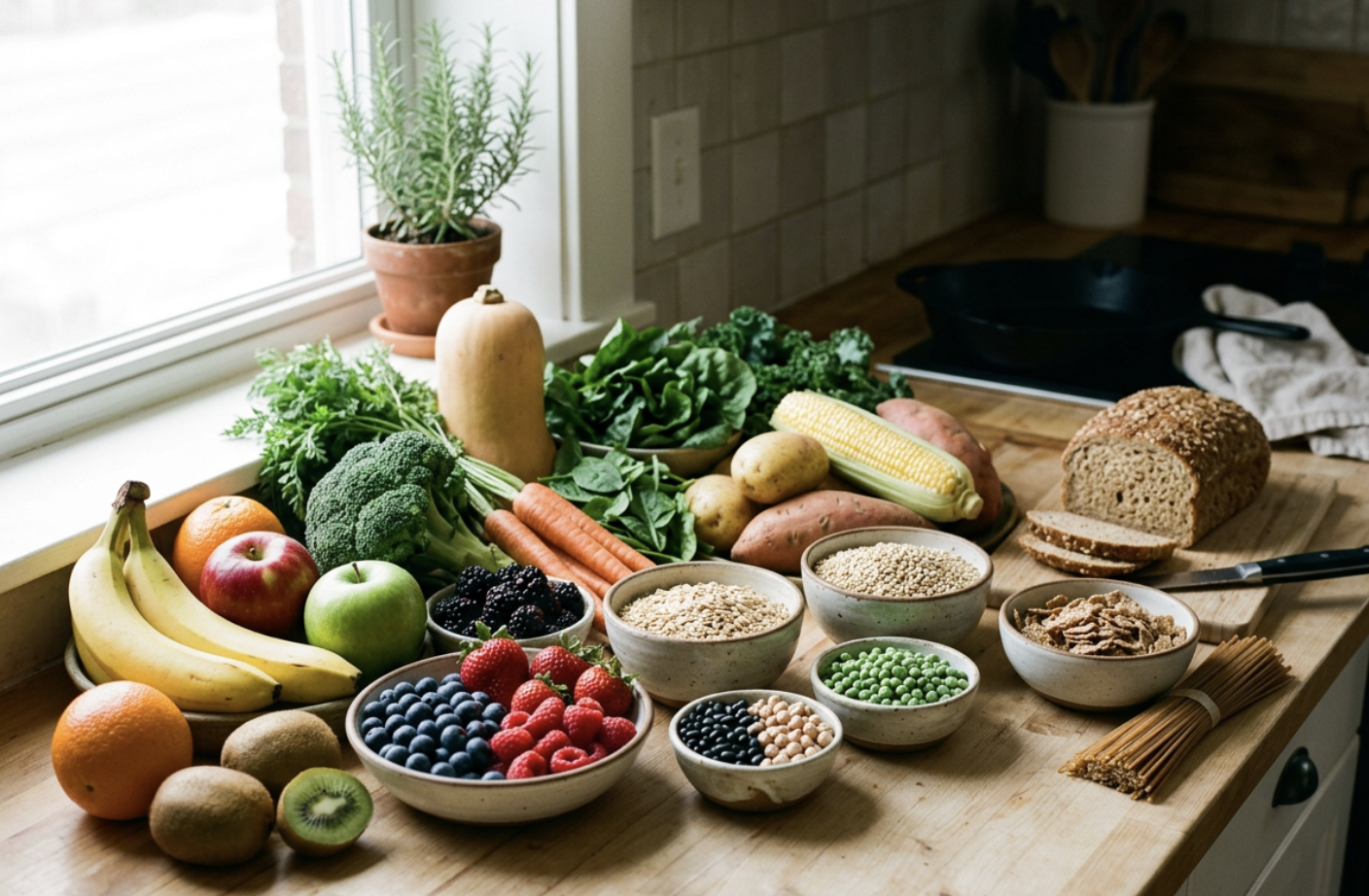
And yes—you can still eat white bread, pasta, rice, dessert, or other foods you enjoy.
Healthy eating does not require every single carbohydrate you consume to be the highest-fiber option available.
Your overall dietary pattern matters much more than one piece of bread or one bowl of pasta.
The Bottom Line
Carbohydrates are not the enemy.
They are a major source of energy and are found in everything from fruit and vegetables to grains, beans, dairy products, and desserts.
Instead of sorting foods into “good carbs” and “bad carbs,” research supports paying more attention to the quality and overall source of the carbohydrates you eat.
That may mean choosing fiber-rich foods such as fruits, vegetables, whole grains, and legumes more often—without feeling like you have to completely eliminate refined grains, sugar, bread, potatoes, or other foods you enjoy.
Nutrition does not have to be perfect to be healthy.
And eating a carbohydrate is definitely not something you need to feel guilty about.
Sources
Reynolds, A., Mann, J., Cummings, J., Winter, N., Mete, E., & Te Morenga, L. (2019). Carbohydrate quality and human health: A series of systematic reviews and meta-analyses. The Lancet, 393(10170), 434–445.
Aune, D., et al. (2016). Whole grain consumption and risk of cardiovascular disease, cancer, and all cause and cause specific mortality: Systematic review and dose-response meta-analysis of prospective studies. BMJ, 353, i2716.
Gardner, C. D., et al. (2018). Effect of low-fat vs low-carbohydrate diet on 12-month weight loss in overweight adults and the association with genotype pattern or insulin secretion: The DIETFITS randomized clinical trial. JAMA, 319(7), 667–679.
Te Morenga, L., Mallard, S., & Mann, J. (2013). Dietary sugars and body weight: Systematic review and meta-analyses of randomized controlled trials and cohort studies. BMJ, 346, e7492.
Aune, D., et al. (2021). Fruit and vegetable consumption and the risk of type 2 diabetes: A systematic review and dose-response meta-analysis of prospective studies. BMJ Nutrition, Prevention & Health.
World Health Organization. (2023).Carbohydrate intake for adults and children: WHO guideline.
World Health Organization. (2026).Healthy diet.