You Don’t Need to Live at the Gym: How Much Movement Do You Actually Need?
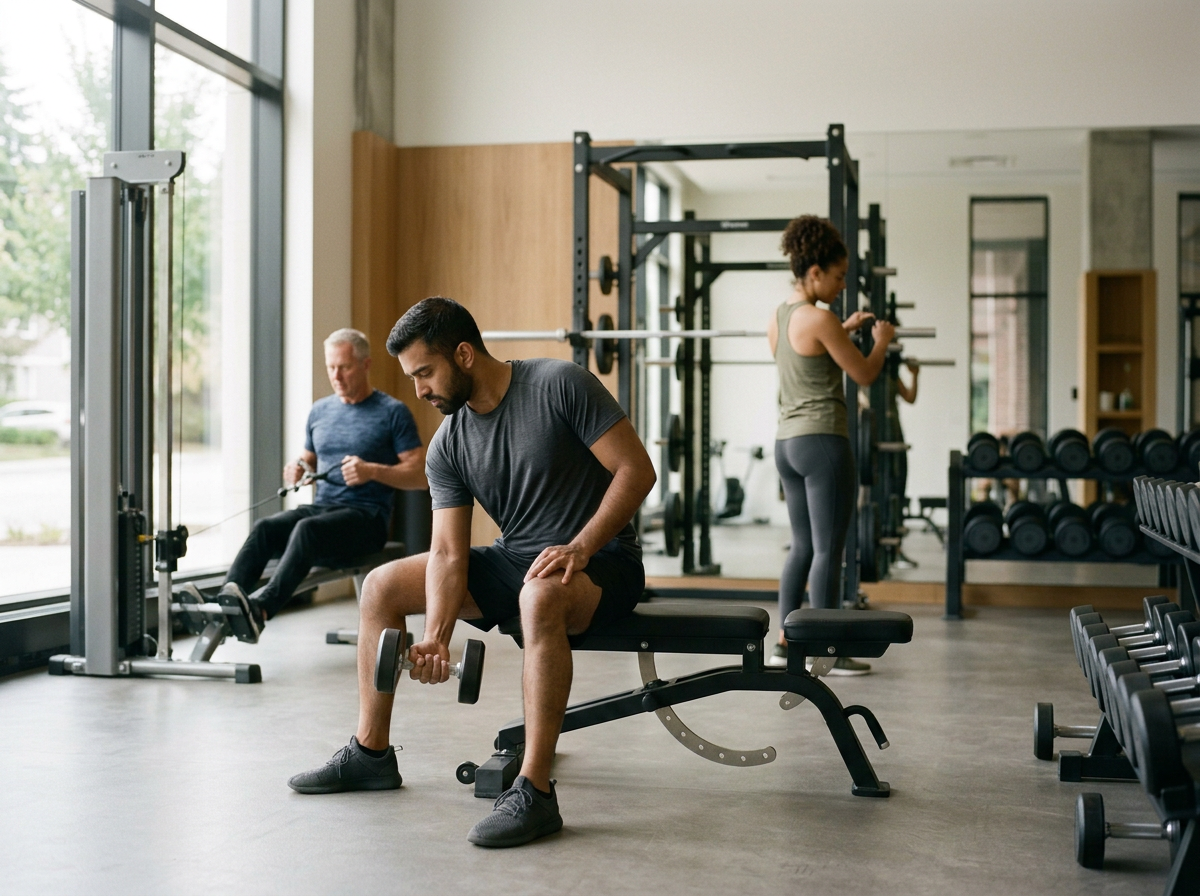
When people hear the word exercise, they often picture an intense workout, a crowded gym, or someone running five miles before breakfast.
But being physically active doesn't have to look like that.
Walking your dog counts. Taking the stairs counts. Dancing counts. Riding a bike counts. Strength training counts. And yes, a workout class counts too.
The World Health Organization (WHO) emphasizes that all physical activity counts and that some movement is better than none.
So if you've ever thought:
“There's no point unless I can do a full workout.”
That's simply not true.
First... What Actually Counts as Physical Activity?
Physical activity is broader than structured exercise.
Exercise usually refers to planned physical activity, like going for a run, lifting weights, attending a Pilates class, or doing a workout video.
But physical activity can also include everyday movement such as:
Walking
Biking
Dancing
Gardening
Hiking
Cleaning
Playing sports
Taking the stairs
Walking your dog
Doing physically active work
Strength training
WHO specifically recognizes physical activity performed during leisure, transportation, work, sports, and everyday activities.
Read the WHO Guidelines on Physical Activity and Sedentary Behaviour
That's important because movement doesn't suddenly stop being beneficial just because you weren't wearing workout clothes when you did it.
So... How Much Exercise Do You Actually Need?
For most adults, WHO recommends:
150–300 minutes of moderate-intensity aerobic activity per week
OR
75–150 minutes of vigorous-intensity aerobic activity per week
OR
A combination of the two
Adults are also encouraged to do muscle-strengthening activities involving the major muscle groups at least two days per week.
View the WHO physical activity recommendations
Now, 150 minutes can sound like a lot when you hear it all at once.
But spread across an entire week?
That's about:
30 minutes × 5 days
And it doesn't have to happen in one perfect 30-minute workout.
A walk in the morning, another walk later in the day, and some additional movement during your normal routine can all contribute.
One of the major messages from WHO's updated guidelines is:
Every move counts.
What Does “Moderate Intensity” Even Mean?
You don't need a fitness tracker to figure out whether you're moving at a moderate intensity.
Moderate-intensity activity generally means you're working hard enough that your breathing and heart rate increase, but you're not going all-out.
Examples may include:
Brisk walking
Recreational cycling
Dancing
Water aerobics
Hiking on relatively easy terrain
Some types of active household or yard work
Vigorous activity requires more effort and may include things like:
Running
Fast cycling
Swimming laps
High-intensity interval training
More strenuous sports
You also don't have to choose one or the other.
A week could include walking, a workout class, lifting weights, hiking, and whatever other forms of movement you actually enjoy.
There isn't one perfect way to be active.
Do You Really Need 10,000 Steps a Day?
You've probably heard that you have to get 10,000 steps every day to be healthy.
But 10,000 is not a magical cutoff.
A large meta-analysis published in The Lancet Public Health examined step counts from 15 international studies involving more than 47,000 adults.
Researchers found that taking more steps was associated with progressively lower mortality risk—but the point at which additional benefits appeared to level off varied by age.
Among adults younger than 60, risk continued to decrease until approximately 8,000–10,000 steps per day.
Among adults 60 and older, the benefit appeared to level off closer to approximately 6,000–8,000 steps per day.
Importantly, people didn't suddenly receive zero benefit because they weren't hitting 10,000.
Read the Paluch et al. step-count meta-analysis
Another meta-analysis involving more than 226,000 participants found that every additional 1,000 daily steps was associated with a lower risk of all-cause mortality.
Read the 2023 step-count meta-analysis
Because these studies are observational, they show associations rather than proving that a specific number of steps directly causes a longer life.
But the overall message is still useful:
You do not have to reach 10,000 steps before walking “counts.”
Going from very little movement to a little more movement can still matter.
Walking Is Real Exercise

Walking sometimes gets treated like the less impressive version of exercise.
It shouldn't.
Walking is accessible, doesn't require a gym membership, and can contribute toward your weekly aerobic physical activity.
You can also adjust the intensity pretty easily.
You could:
Walk faster
Walk uphill
Increase the distance
Take the stairs
Add short bursts of faster walking
Simply walk more often throughout the day
And again, you don't have to transform every walk into a power-walking competition.
Even accumulating more steps throughout your normal day has been associated with better health outcomes.
Read the Lancet Public Health step-count research
If the choice is between a 15-minute walk and doing nothing because you don't have time for an hour-long workout:
Take the 15-minute walk.
Cardio Isn't the Only Thing That Matters
Aerobic exercise gets a lot of attention—and it absolutely has important health benefits.
But strength matters too.
WHO recommends muscle-strengthening activity involving the major muscle groups at least two days per week.
And strength training doesn't necessarily mean bodybuilding.
It could include:
Weightlifting
Resistance bands
Body-weight exercises
Machines
Some Pilates exercises
Push-ups
Squats
Lunges
A 2022 systematic review and meta-analysis examined resistance training and mortality risk.
Compared with no resistance training, doing any resistance training was associated with a 15% lower risk of all-cause mortality in the pooled observational studies.
The researchers also found associations with lower cardiovascular and cancer mortality, although the exact relationship between the amount of resistance training and long-term outcomes still needs more research.
Read the Shailendra et al. systematic review and meta-analysis
Again, because much of the mortality evidence is observational, we shouldn't interpret this as “lifting weights guarantees you'll live longer.”
But it does reinforce the idea that:
Fitness isn't only about cardio.
Building and maintaining strength is an important part of overall physical health.
What If You Sit Most of the Day?
A lot of us spend a huge portion of the day sitting.
We sit at school.
We sit at work.
We sit in the car.
Then we sit on the couch.
And even someone who exercises regularly can still spend a lot of the rest of their day sedentary.
Research suggests that long periods of sedentary behavior are associated with poorer health outcomes, although how much risk comes from the sitting itself versus low overall activity can be complicated.
A 2023 systematic review and meta-analysis found that prolonged sedentary patterns were associated with increased risks of several chronic health outcomes and all-cause mortality. The researchers found some evidence supporting breaking up prolonged sitting approximately every 30–60 minutes, although they noted that the precise threshold remains uncertain.
Read the Wu et al. systematic review on sedentary behavior
This doesn't mean you need to panic every time you've been sitting for 31 minutes.
Think of it as a reminder to move when you can.
You could:
Stand up during a phone call
Walk around between classes or meetings
Take a quick lap around the building
Stretch your legs
Refill your water
Walk somewhere instead of driving when practical
Those little movement breaks may not feel like “exercise,” but they still reduce the amount of uninterrupted time you're sitting.
Exercise Can Benefit Your Mental Health Too
Physical activity isn't only about your heart, muscles, or body composition.
It can also support mental well-being.
A large 2023 umbrella review published in the British Journal of Sports Medicine analyzed 97 systematic reviews involving more than 128,000 participants.
Overall, physical activity interventions were associated with improvements in symptoms of depression, anxiety, and psychological distress across a wide range of adult populations.
Read the Singh et al. overview of systematic reviews
A more recent 2026 umbrella review that combined evidence from more than 79,000 participants also found that exercise reduced symptoms of depression and anxiety across numerous populations and types of exercise.
Read the 2026 exercise and mental-health umbrella review
That doesn't mean exercise is a replacement for mental-health treatment when treatment is needed.
It means physical activity can be one helpful part of supporting both physical and mental health.
Do Your Workouts Have to Be Intense?
No.
This is one of the biggest misconceptions surrounding fitness.
You do not have to finish every workout drenched in sweat.
You don't have to burn a certain number of calories.
And your workout doesn't have to feel miserable in order for it to “count.”
WHO's recommendations specifically include moderate-intensity physical activity, and its guidelines emphasize that some activity is better than none.
Higher-intensity exercise can absolutely be appropriate and enjoyable for many people.
But it isn't the only way to be healthy.
A brisk walk is movement.
A beginner strength workout is movement.
Yoga is movement.
A bike ride is movement.
Dancing around your apartment while cleaning is movement.
The best form of activity is often one you actually enjoy enough to keep doing.
What If You're Completely Inactive Right Now?
You don't need to go from zero exercise to training six days a week.
In fact, thinking that exercise has to be “all or nothing” can make getting started much harder than it needs to be.
If you're currently doing very little physical activity, start with something realistic.
Maybe that's:
10 minutes of walking after dinner.
Then eventually it becomes 15.
Maybe you start taking the stairs instead of the elevator.
Maybe you try one strength workout each week.
Maybe you find an activity that doesn't even feel like traditional exercise.
The WHO's message is simple:
Some physical activity is better than none.
You can build from there.
You Don't Have to “Earn” Your Food With Exercise
Movement also shouldn't be treated like punishment for eating.
You don't need to run because you ate dessert.
You don't need to “burn off” dinner.
And you didn't “earn” lunch because you worked out that morning.
Physical activity has benefits that go far beyond calorie expenditure.
It can support:
Cardiovascular fitness
Muscular strength
Physical function
Mental well-being
Long-term health
Turning exercise entirely into a way to compensate for food can take something beneficial and make it unnecessarily stressful.
Your body deserves movement because movement can support your health—not because you need to punish it for eating.
What Does a Balanced Week of Movement Look Like?
There isn't one perfect schedule.
For one person, it might look like:
Monday: 30-minute walk
Tuesday: Strength training
Wednesday: 30-minute walk
Thursday: Rest or light movement
Friday: Strength training
Saturday: Hike, bike ride, workout class, or longer walk
Sunday: Rest
For someone else, it might be completely different.
You could dance.
Swim.
Lift weights.
Play tennis.
Take Pilates.
Walk everywhere.
Ride your bike.
Do a combination.
The goal isn't to copy someone else's workout routine.
The goal is to find ways to move regularly, build strength, reduce long periods of inactivity when possible, and choose activities you can realistically maintain.
The Bottom Line
You do not need to live at the gym to benefit from physical activity.
For most adults, health guidelines recommend approximately 150–300 minutes of moderate aerobic activity each week or 75–150 minutes of vigorous activity, along with strength training on at least two days per week.
But those recommendations aren't an all-or-nothing test.
You don't fail at exercise because you only walked for 15 minutes.
You don't need exactly 10,000 steps.
And you don't have to do the hardest workout possible to make movement worthwhile.
Walk.
Lift something.
Ride your bike.
Dance.
Stretch your legs when you've been sitting for a long time.
Find something you actually like doing.
Your body doesn't care whether your movement looked impressive. It just knows that you moved.
Sources
World Health Organization. (2020). WHO guidelines on physical activity and sedentary behaviour. View WHO guidelines
Paluch, A. E., et al. (2022). Daily steps and all-cause mortality: A meta-analysis of 15 international cohorts. The Lancet Public Health, 7(3), e219–e228. View article on PubMed
Banach, M., et al. (2023). The association between daily step count and all-cause and cardiovascular mortality: A meta-analysis. European Journal of Preventive Cardiology. View article on PubMed
Shailendra, P., Baldock, K. L., Li, L. S. K., Bennie, J. A., & Boyle, T. (2022). Resistance training and mortality risk: A systematic review and meta-analysis. American Journal of Preventive Medicine, 63(2), 277–285. View article on PubMed
Wu, J., Fu, Y., Chen, D., Zhang, H., Xue, E., Shao, J., Tang, L., Zhao, B., Lai, C., & Ye, Z. (2023). Sedentary behavior patterns and the risk of non-communicable diseases and all-cause mortality: A systematic review and meta-analysis. International Journal of Nursing Studies, 146, 104563. View article on PubMed
Singh, B., et al. (2023). Effectiveness of physical activity interventions for improving depression, anxiety and distress: An overview of systematic reviews. British Journal of Sports Medicine, 57(18), 1203–1209. View article on PubMed
Munro, N. R., et al. (2026). Effect of exercise on depression and anxiety symptoms: Systematic umbrella review with meta-meta-analysis. British Journal of Sports Medicine, 60(8), 590–599. View article on PubMed